
Introduction
The role of a security guard has evolved far beyond standing watch or enforcing rules. In today’s workplaces, commercial complexes, hospitals, malls, hotels, and residential communities, security personnel are often the first and most frequent point of contact for visitors, employees, and customers.
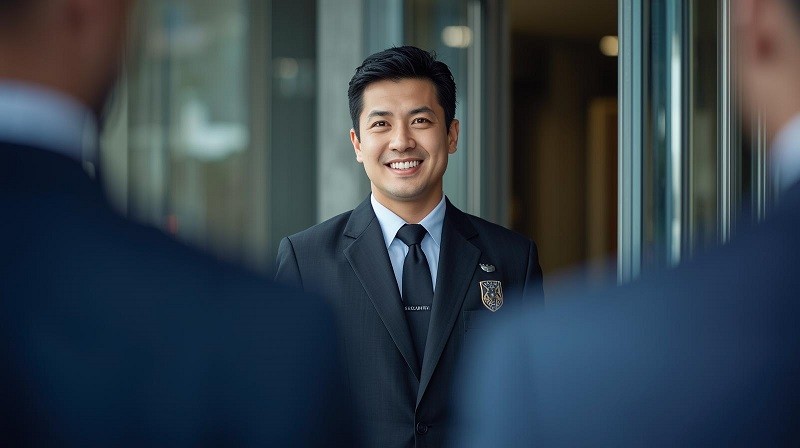
This evolution has made customer service skills in security roles just as important as physical vigilance. Modern security guards are no longer just protectors—they are safety ambassadors who represent the organization’s values while maintaining a secure environment.
This blog explores why customer service is critical in security roles, how guards balance authority with approachability, and how professional training transforms security staff into trusted frontline representatives.
1. Why Customer Service Matters in Security Roles
Security guards operate in people-facing environments where interactions shape perceptions. A guard’s behavior can influence:
- Visitor confidence and comfort
- Brand image and reputation
- Conflict escalation or resolution
- Compliance with rules and procedures
A guard who communicates politely and confidently can prevent incidents before they occur, while a poorly trained guard can unintentionally create tension.
2. Security Guards as the Face of an Organization
In many environments, security staff:
- Greet visitors at entrances
- Provide directions and information
- Enforce access control policies
- Assist during emergencies
Because of this visibility, guards often define the first impression of an organization.
A professional, courteous security guard reassures people that they are in a safe, well-managed environment.
3. What Does “Safety Ambassador” Mean?
A safety ambassador is a security professional who:
- Protects people and property
- Assists visitors with courtesy
- Communicates rules respectfully
- Resolves minor issues calmly
- Acts as a guide during emergencies
Rather than relying on authority alone, safety ambassadors use communication, empathy, and situational awareness to maintain security.
4. Core Customer Service Skills Every Security Guard Needs
4.1 Communication Skills
Clear and respectful communication helps guards:
- Give accurate instructions
- Explain policies without confrontation
- De-escalate tense situations
- Coordinate with staff and management
Good communication prevents misunderstandings and builds cooperation.
4.2 Empathy and Emotional Intelligence
Security guards frequently deal with stressed, confused, or frustrated individuals. Empathy allows guards to:
- Understand emotional cues
- Respond calmly to complaints
- Reduce hostility
- Build trust during interactions
This skill is especially critical in hospitals, hospitality venues, and corporate offices.
4.3 Professional Appearance and Body Language
Uniformed presence matters. Guards who maintain:
- Proper grooming
- Confident posture
- Friendly facial expressions
Appear both authoritative and approachable, reinforcing safety without intimidation.
5. Balancing Authority with Approachability
One of the biggest challenges in security roles is balancing rule enforcement with customer experience.
Effective security staff:
- Enforce policies consistently but politely
- Explain the “why” behind rules
- Avoid aggressive or dismissive behavior
- Know when to escalate issues
This balance ensures compliance while preserving goodwill.
Related reading on professionalism in guarding:
https://www.promansecuritech.com/blog/how-trained-security-personnel-can-protect-your-organization-24-7
6. Customer Service in Different Security Environments
6.1 Corporate Offices
In corporate environments, guards act as:
- Access control managers
- Visitor coordinators
- Emergency response assistants
Professional interaction reflects corporate culture and discipline.
6.2 Retail and Commercial Spaces
Retail security guards must:
- Assist shoppers
- Deter theft without harassment
- Handle disputes tactfully
Positive interactions reduce friction and improve customer satisfaction.
6.3 Hospitality and Healthcare
In hotels and hospitals, customer service is critical. Guards support:
- Guest comfort
- Patient and visitor guidance
- Emotional situations
Their behavior directly impacts service quality.
https://www.promansecuritech.com/blog/security-in-hospitality-sector-hotels-resorts
7. Conflict De-escalation Through Customer Service
Many security incidents start as minor disagreements. Guards trained in customer service can:
- Calm agitated individuals
- Resolve misunderstandings quickly
- Prevent physical confrontations
- Reduce the need for force
This approach improves safety outcomes and reduces complaints or legal risks.
8. Training Security Guards as Safety Ambassadors
Professional security agencies invest in training that includes:
- Customer interaction scenarios
- Communication and soft-skills workshops
- Cultural sensitivity training
- Conflict management techniques
- Stress management and emotional control
This training transforms guards from rule enforcers into trusted safety partners.
Industry insights on service-oriented security roles:
https://www.securitymagazine.com
9. Benefits of Customer-Focused Security Services
Organizations that prioritize customer service in security roles benefit from:
- Improved visitor experience
- Reduced conflicts and complaints
- Stronger brand reputation
- Higher trust in security teams
- Better cooperation during emergencies
Customer-focused security creates a safer and more welcoming environment.
10. How Proman Securitech Builds Service-Oriented Security Teams
Proman Securitech emphasizes:
- Hospitality-driven training
- Professional conduct standards
- Continuous performance evaluation
- Client-specific service protocols
This ensures that every guard deployed acts as a safety ambassador, not just a watchkeeper.
Learn more at:
https://www.promansecuritech.com
Conclusion
Customer service skills in security roles are no longer optional—they are essential. Modern security guards must protect, assist, and communicate effectively, acting as safety ambassadors who represent trust, professionalism, and care.
By investing in service-oriented training and leadership, organizations can create security environments that are both safe and welcoming.
At Proman Securitech, we believe that the best security professionals are those who combine vigilance with empathy—protecting people while enhancing their experience.
Call to Action:
Contact Proman Securitech to deploy professionally trained security personnel who deliver safety with service excellence.
Pingback: nexium over the counter usa
Pingback: viagra t shirt
Pingback: cialis shape and.color
Pingback: cenforce 100 india
Pingback: amneal sildenafil
Pingback: contrave and orlistat
Pingback: semaglutid tablett pris
Pingback: levitra generic
Pingback: bupropion naltrexone contrave buy
Pingback: orlistat alli purchase
Pingback: terbinafine side effects details
Pingback: ivermectin strongyloides clinical summary
Pingback: minoxidil treatment outcomes
Pingback: minoxidil foam vs liquid performance data
Pingback: minoxidil speed of action
Pingback: minoxidil pk clinical overview
Pingback: minoxidil women’s usage overview
Pingback: sildenafil cost comparison
Pingback: vardenafil adverse reactions
Pingback: orlistat oily stool effects
Pingback: augmentin vs amoxicillin for sinusitis
Pingback: penicillin allergy diagnosis
Pingback: PK Terminology Guide