
Introduction
Retail businesses operate on tight margins. Even a small amount of shoplifting or internal theft can quietly eat into profits and destabilize operations. That’s why retail store security guards are no longer a luxury reserved for large chains—they are a necessity for any store that wants to protect stock, staff and customers.
Dedicated security personnel do much more than stand at the entrance. They observe behaviour, manage risks, coordinate with store staff, respond to incidents and act as a powerful visual deterrent against crime. In this blog, we’ll look at how professional security guards help reduce shoplifting and inventory loss, and why partnering with a reliable security manpower company can transform your store’s safety and profitability.
Internal link suggestion:
Learn how trained guards protect businesses round the clock in our post:
How Trained Security Personnel Can Protect Your Organization 24×7
1. Understanding Shoplifting and Inventory Loss in Retail
Retail losses generally fall into four categories:
- Shoplifting by customers
- Employee theft or internal pilferage
- Administrative errors (billing, stock counting, pricing)
- Supplier fraud or delivery discrepancies
Industry studies across markets consistently show that shoplifting and employee theft together contribute to the majority of shrinkage. Even a small daily loss in fast-moving items can add up to thousands per month.
Without a proper security strategy, many incidents go unnoticed. Dedicated retail security guards help plug these gaps by providing constant physical presence, active monitoring and accurate reporting.
For global statistics and trends on retail shrinkage, refer to the National Retail Federation’s research on retail loss:
https://nrf.com
2. Visible Deterrence: The First Line of Defence
One of the biggest advantages of having uniformed security guards is the visual deterrent effect. Potential shoplifters are far less likely to attempt theft when they see:
- A guard at the entrance or exit
- Regular patrols around aisles and corners
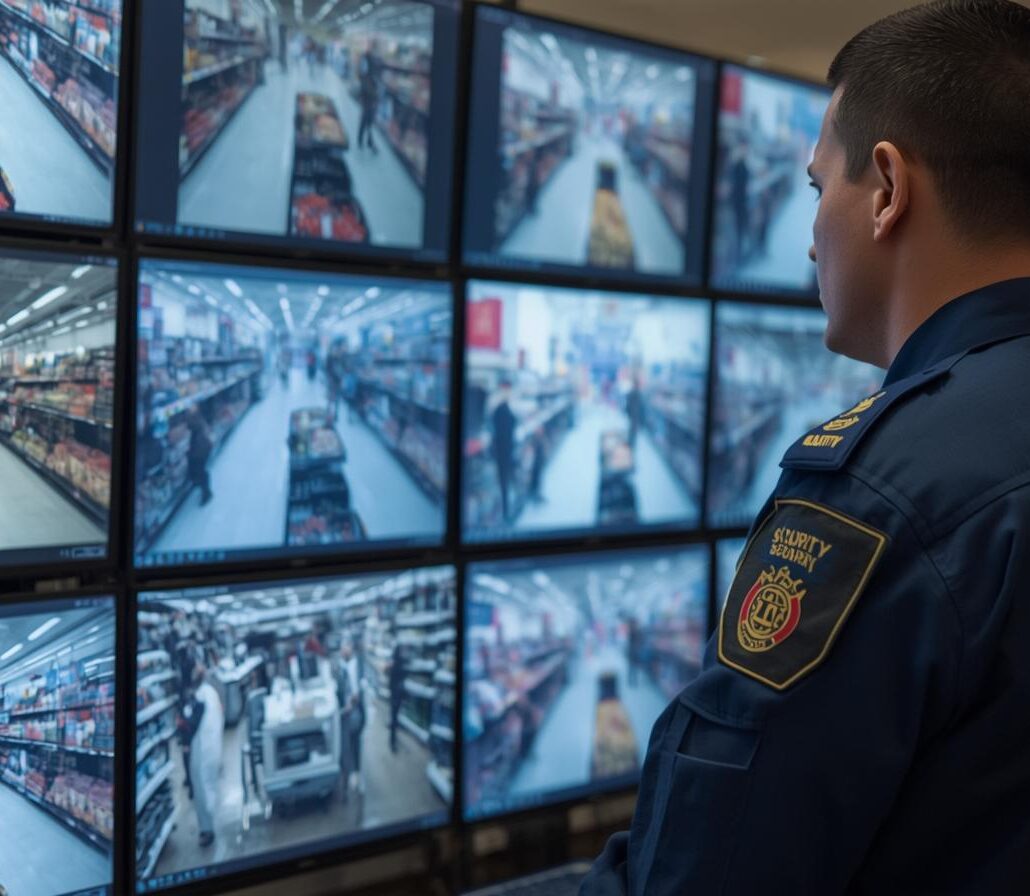
- Guards watching CCTV feeds in real time
Criminals prefer easy targets. A store with dedicated guards signals that security is taken seriously, raising the perceived risk for anyone considering theft. This alone can significantly reduce casual shoplifting and opportunistic crime.
3. Proactive Surveillance and Behavioural Observation
While CCTV cameras are essential, they are most effective when paired with trained human observers. Professional retail security guards are skilled at recognising:
- Nervous or suspicious body language
- Repeated visits to high-value sections
- Attempts to remove tags or hide items
- Groups trying to distract staff while someone else steals
Guards can discreetly position themselves near vulnerable sections such as cosmetics, alcohol, electronics, branded apparel or small high-value goods. They can politely engage customers, offer assistance and, in doing so, make it harder for potential thieves to act.
Read more about how security manpower services help retailers minimise shrinkage.
4. Coordinated Use of CCTV and Technology
Modern retail security is a blend of technology and manpower. Security guards work closely with CCTV and other systems to provide layered protection:
- Monitoring live camera feeds for unusual activity
- Guiding floor staff via radios to check suspicious behaviour
- Reviewing recorded footage after an incident
- Identifying theft patterns (time of day, particular aisles, repeat offenders)
In larger stores or malls, guards may also support EAS (Electronic Article Surveillance) systems, access control and alarm systems. When integrated as a team, they create a strong defence that is far more effective than cameras or systems operating alone.
To explore how technology is changing retail security, see this article from Security Magazine:
How Technology is Changing Retail Security
5. Preventing Internal Theft and Employee Misconduct
Inventory loss isn’t always caused by customers. Internal theft—by employees or contractors—can be even more damaging. Common examples include:
- Unbilled items passed to friends or relatives
- Manipulation of discounts, loyalty points or returns
- Removal of stock from back rooms or loading docks
- Collusion with delivery staff
Dedicated security guards help control these risks by:
- Supervising stock rooms, loading bays and back-of-house areas
- Verifying inward and outward movement of goods against documentation
- Monitoring cash counters and refund desks
- Reporting suspicious internal behaviour to management
Their presence encourages a culture of discipline and accountability, making it harder for internal theft to go unnoticed.
6. Safe Incident Response and Conflict Management
Confronting a suspected shoplifter is sensitive and potentially dangerous. Poor handling can lead to legal issues, physical harm or reputational damage. Professional retail security guards are trained to:
- Approach suspects calmly and respectfully
- Ask appropriate questions and request proof of purchase where needed
- Detain individuals safely, when allowed by law and company policy
- Coordinate with store managers and, if required, local police
- Document incidents with written reports and CCTV references
This structured response protects both the store and genuine customers, ensuring that security actions are fair, consistent and legally sound.
7. Enhancing Customer Experience and Store Image
Security is not only about catching thieves. When done professionally, it enhances the customer experience:
- Customers feel safer when they see guards at entrances and parking areas
- Guards can guide visitors to departments, exits or restrooms
- They assist in managing queues during rush hours or sales
- They support evacuation and emergency procedures calmly
A secure environment allows shoppers to focus on their purchases, improving dwell time, basket size and overall satisfaction. For brands, this translates into loyalty and positive word-of-mouth.
See how corporate office security improves both safety and employee experience.
8. Supporting Store Operations and Loss Prevention Policies
Security guards often play a crucial role in the store’s broader loss prevention strategy, including:
- Enforcing bag-check policies at exits
- Ensuring that high-value goods are tagged, locked or displayed securely
- Assisting with night closing and opening procedures
- Monitoring cleaners, vendors and contractors working after hours
- Participating in periodic security audits and risk assessments
When security is integrated into daily operations, the store becomes systematically harder to steal from, and staff are more aware of the importance of following procedures.
9. Choosing the Right Security Partner for Your Retail Store
The effectiveness of your retail security depends heavily on the quality of the security agency you partner with. When choosing a provider, consider:
- Licensing and compliance with local regulations
- Guard training standards, including soft skills and legal awareness
- Experience in retail environments such as supermarkets, malls or specialty stores
- Ability to provide supervisors, backup manpower and 24×7 support
- Transparent reporting, visitor logs and incident documentation
A professional agency such as Proman Securitech combines trained guards, strong supervision and robust processes to deliver consistent protection across single or multiple locations.
Visit Proman Securitech to explore customised retail security manpower solutions for your store or chain.