
Introduction
The hospitality industry is built on trust, comfort, and guest experience. Hotels and resorts welcome guests from diverse backgrounds, often operating 24×7 with high footfall, open access areas, and valuable assets. This makes security in the hospitality sector both critical and complex.
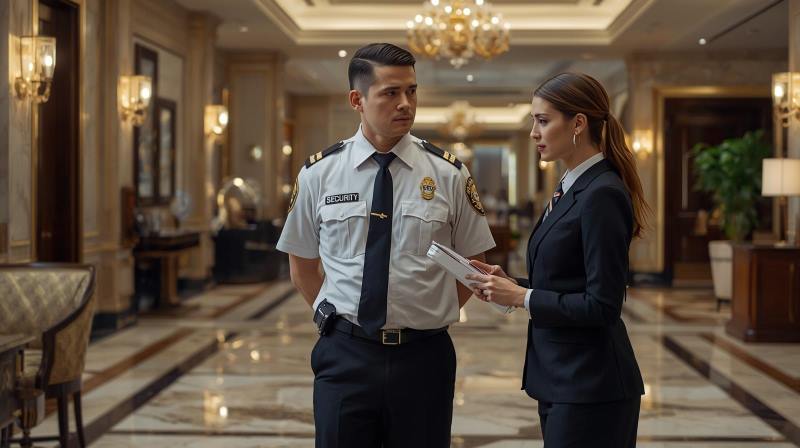
Unlike other industries, hospitality security must remain highly effective yet discreet. Guests should feel safe without feeling restricted. From front-desk coordination and crowd control during peak seasons to handling lost & found and VIP protection, modern hotel security requires a well-coordinated blend of trained security personnel, operational protocols, and technology.
This blog explores best practices for securing hotels and resorts while maintaining a welcoming environment.
1. Unique Security Challenges in Hotels & Resorts
Hotels and resorts face security challenges that differ significantly from offices or industrial sites, including:
- Open-access lobbies and public spaces
- High guest turnover and temporary visitors
- Events, weddings, and conferences on-site
- International guests with varied expectations
- Valuable guest belongings and hotel assets
- Reputation-sensitive environments
Any security lapse can lead not only to losses but also to negative reviews, legal issues, and brand damage.
2. Guest Safety: The Foundation of Hospitality Security
2.1 Visible but Approachable Security Presence
Guests feel reassured when they see uniformed security personnel who are:
- Well-groomed and professional
- Courteous and guest-friendly
- Easily approachable for assistance
Security guards in hotels act as protectors, guides, and problem-solvers, helping guests with directions, lost items, or emergency situations.
2.2 Monitoring Public Areas and Guest Movement
Trained guards monitor:
- Hotel entrances and exits
- Lobbies and lounges
- Parking areas and drop-off zones
- Elevators and corridors
- Poolside and recreational areas
Their presence deters theft, harassment, and unauthorized access while ensuring quick response when needed.
Internal link:
Learn how trained guards enhance safety across industries:
How Trained Security Personnel Can Protect Your Organization 24×7
3. Front-Desk Security Coordination
3.1 Why Front Desk and Security Must Work Together
The front desk is the first point of contact for guests and often the first to notice unusual behavior or concerns. Effective hotel security depends on seamless coordination between:
- Front-desk staff
- Concierge teams
- Security personnel
- Duty managers
This collaboration ensures faster identification and resolution of potential security issues.
3.2 Key Coordination Practices
Best practices include:
- Real-time communication via radios or internal systems
- Alerting security about suspicious visitors or disputes
- Coordinating room access during emergencies
- Supporting guest privacy and safety requests
Security guards trained in hospitality etiquette ensure that issues are handled discreetly, preserving guest comfort.
4. Crowd Control During Peak Seasons and Events
4.1 High-Risk Periods in Hospitality
Hotels and resorts experience peak security demands during:
- Tourist seasons
- Festivals and holidays
- Weddings and social events
- Corporate conferences
- Pool parties and entertainment nights
During these periods, crowd density increases and risks such as theft, conflicts, or accidents rise.
4.2 Role of Security in Crowd Management
Dedicated hospitality security guards manage crowds by:
- Controlling entry and exit flow
- Monitoring guest capacity in common areas
- Preventing overcrowding near pools, banquet halls, or elevators
- De-escalating conflicts politely and professionally
Effective crowd control ensures guest safety, regulatory compliance, and smooth event operations.
Internal link:
Related reading on event and crowd security:
Why Professional Security Guards Are Essential for Events
5. Handling Lost & Found Procedures Securely
5.1 Why Lost & Found Is a Security Responsibility
Guests frequently misplace valuables such as:
- Wallets and phones
- Passports and IDs
- Jewelry and watches
- Electronic devices
Mishandling lost property can lead to disputes, complaints, or legal issues.
5.2 Best Practices for Lost & Found Management
Professional security teams ensure:
- Proper logging and documentation of found items
- Secure storage in designated areas
- Verification of ownership before return
- Coordination with front desk and management
This structured approach builds guest trust and accountability while preventing internal misuse.
6. VIP Protection Procedures in Hotels & Resorts
6.1 Who Requires VIP Security?
VIP guests may include:
- Celebrities and public figures
- Business leaders and diplomats
- High-net-worth individuals
- Wedding parties and dignitaries
Their presence increases security sensitivity and media attention.
6.2 Discreet and Professional VIP Security
VIP protection in hospitality focuses on low-profile security, including:
- Controlled access to floors or villas
- Escorting VIPs discreetly within premises
- Coordination with hotel management and local authorities
- Monitoring paparazzi or unauthorized followers
Security guards must be trained in confidentiality, etiquette, and situational awareness, ensuring protection without disrupting the guest experience.
External link:
Hospitality security trends and best practices are discussed by global experts at:
https://www.securitymagazine.com
7. Integrating Technology with Hospitality Security
Modern hotels and resorts enhance security by combining guards with:
- CCTV surveillance in public areas
- Access control for staff-only zones
- Panic buttons at front desks
- Incident reporting systems
Security personnel act as first responders, while technology provides visibility, evidence, and coordination support.
8. Emergency Response and Crisis Handling
Hotels must be prepared for emergencies such as:
- Fire or evacuation
- Medical emergencies
- Guest disputes or violence
- Natural disasters
Trained security guards support emergency response by:
- Guiding guests to safe areas
- Coordinating with fire and medical services
- Controlling panic and crowd movement
- Assisting management during crisis communication
Their role is critical in protecting lives and maintaining order.
9. Partnering with a Professional Hospitality Security Agency
Hotels and resorts benefit from working with experienced security agencies that provide:
- Hospitality-trained security personnel
- Background-verified and uniformed guards
- Supervisory support and audits
- Scalable manpower during peak seasons
Proman Securitech offers customized hospitality security solutions designed to align with brand standards and guest expectations.
Visit https://www.promansecuritech.com to learn more about professional hotel and resort security services.
Conclusion
Security in the hospitality sector is about more than preventing crime—it’s about protecting experiences. Hotels and resorts must create environments where guests feel safe, respected, and cared for at all times.
By combining trained hospitality-focused security guards, front-desk coordination, crowd control strategies, and clear procedures for lost & found and VIP protection, hospitality businesses can maintain safety without compromising comfort.
At Proman Securitech, we specialize in delivering professional, discreet, and guest-friendly hospitality security solutions that help hotels and resorts operate safely, smoothly, and confidently.
Contact Proman Securitech today for a customized security assessment for your hotel or resort.
Pingback: sildenafil maximum effect
Pingback: cyclosporine common name
Pingback: propecia treatment
Pingback: ozempic teeth images
Pingback: does doxycycline hyclate cause indigestion
Pingback: doxycycline for kidney disease
Pingback: ivermectin mechanism overview
Pingback: ivermectin scabies improvement
Pingback: avanafil contraindication advisory
Pingback: vardenafil health contraindications
Pingback: onset and duration metrics
Pingback: bronchitis risk factors
Pingback: Onset Variability Research