
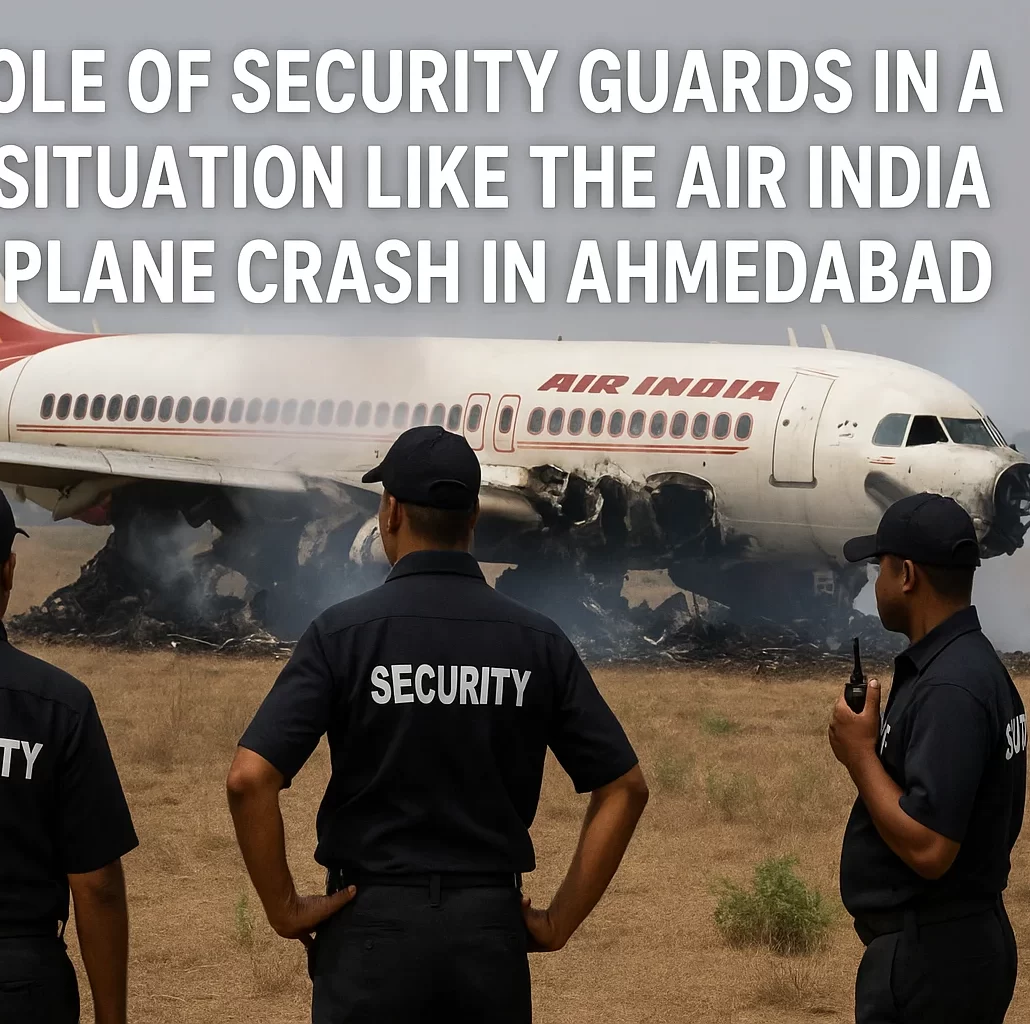
In times of crisis, especially aviation accidents like the Air India plane crash in Ahmedabad, the first responders play a crucial role. Among them, security guards are often unsung heroes who contribute significantly in handling emergencies. Their quick thinking, courage, and coordination with official authorities can save lives and ensure public safety.
This article delves into the vital role of security guards during an aviation disaster, outlining their responsibilities, necessary training, and how they act as a bridge between chaos and control.
Why Security Guards Are Crucial in Emergency Situations
In emergency situations—whether it’s a fire, a medical crisis, or an aviation disaster like a plane crash—security guards often serve as the first line of response. Their presence, training, and quick decision-making play a vital role in managing chaos, protecting lives, and coordinating with official rescue teams. They ensure order when panic strikes.
1. First Responders on Ground
Before paramedics and disaster response teams arrive, on-site security guards are often the first to respond. Their immediate reaction determines the initial safety protocols and crowd control.
2. Managing Panic and Crowd Control
During a crash, panic spreads rapidly. Security guards manage crowd behavior, prevent stampedes, and ensure that help reaches those who need it first.
3. Securing the Crash Site
Preserving the crash site is essential for investigation and recovery operations. Guards play a key role in:
- Preventing unauthorized access
- Maintaining perimeter security
- Assisting police and disaster management teams
What Happened: The Air India Plane Crash in Ahmedabad
Let’s assume the incident involved an emergency landing at Sardar Vallabhbhai Patel International Airport, causing chaos in and around the terminal. Hundreds of passengers and visitors were impacted. In such a case, the airport security guards and nearby private security agencies became critical in managing the situation.
Security Guards’ Key Responsibilities During an Aviation Emergency
During an aviation emergency, security guards take on critical responsibilities that go far beyond routine duties. From initiating emergency protocols and assisting in evacuations to securing crash sites and supporting rescue teams, their role is essential. Their quick actions help minimize casualties, control chaos, and maintain a safe environment until specialized authorities take over.
Activating Emergency Protocols
Security personnel are trained to:
- Trigger alarm systems
- Inform local fire, ambulance, and police services
- Guide staff through evacuation procedures
Evacuation and Life-Saving Measures
They assist:
- Injured individuals out of danger zones
- Instruct passengers using megaphones or public address systems
- Use basic first aid if required
Crowd Management and Public Safety
Preventing Chaos
In emotionally charged moments:
- Guards prevent mob formation
- Block people from recording or live-streaming, which can add panic
- Move crowds to safe holding areas
Handling Media and Onlookers
They create secure lanes for:
- Emergency vehicles
- Authorized media personnel
Coordination with Authorities
Security guards act as the liaison between:
- Local police
- Airport authorities
- Disaster relief organizations
Their role includes:
- Providing ground-level updates
- Helping in passenger identification
- Assisting in search and rescue operations
Technical Assistance and Surveillance
Security teams also help in:
- Reviewing CCTV footage to track the sequence of events
- Assisting authorities in tracing missing passengers
- Supporting investigation teams with evidence and access
How Security Guards Are Trained for Aviation Disasters
Specialized Training Modules
Security agencies and airport authorities conduct training on:
- Fire safety and evacuation
- Terror threat management
- First aid and CPR
- Communication in crisis situations
Role-Play Based Mock Drills
Mock drills simulate real emergencies so that guards:
- Learn how to keep calm
- Practice working under pressure
- Understand roles of other departments
Lessons Learned from the Ahmedabad Crash Scenario
The Importance of Rapid Reaction
Delays in securing a site can lead to:
- Increased casualties
- Unmanageable panic
- Media misinformation
The Value of Professionalism and Composure
A well-trained security guard remains composed, which:
- Calms the surrounding public
- Improves coordination
- Enhances rescue success rates
Top Qualities a Security Guard Needs in Crisis Management
1. Vigilance
Always aware and observant of the surroundings
2. Communication Skills
Able to give clear instructions under pressure
3. Physical Fitness
Capable of helping injured passengers and moving through wreckage
4. First Aid Knowledge
Trained to stabilize a victim before medics arrive
5. Crowd Control Skills
Can disperse or redirect large groups calmly
How Private Security Companies Can Support During Plane Crashes
In urban cities like Ahmedabad, private security agencies also play a major support role:
- Deploying extra personnel
- Managing parking and outer traffic control
- Supporting hospital security where patients are rushed
Government Recommendations for Enhancing Security Guard Role
Mandatory Certification
Encouraging every security guard to undergo aviation safety training
Inclusion in Disaster Drills
Involving private security teams in district-level emergency drills
Incentives and Recognition
Recognizing heroic efforts to boost morale and commitment
Real-Life Examples of Security Guard Heroism in Past Aviation Disasters
- Nepal Plane Crash (2023): Local hotel security guards helped in transporting injured to nearby hospitals.
- Mangalore Airport Crash (2010): Perimeter guards prevented civilians from disturbing the crash site.
Such stories highlight how trained, alert guards save lives even when they are not official first responders.
Conclusion
In a city like Ahmedabad, where the Air India plane crash scenario posed a serious emergency, security guards proved to be critical contributors to public safety and recovery efforts. From crowd control and first aid to coordination and technical support, their involvement cannot be underestimated. As aviation continues to evolve, so must our ground-level response systems. Empowering security guards with the right training, recognition, and tools will ensure that in future disasters, they are even more prepared to protect lives.